On turning 25
Maggie's World Vol. 15

My parents recently sent me a package in the mail containing a pair of sunglasses and hair clip which had been forgotten on my last visit, two volumes of Le Morte D’Arthur (as requested), and a collection of essays called Idle Thoughts of an Idle Fellow by Jerome K. Jerome. My father, ever the deep thinker on my prospects as a humorist, believed I might find Jerome’s comedic voice not dissimilar to my own. Familiar with Jerome only as the author of Three Men In A Boat, which I’ll admit I have not finished, I cracked open his collection of essays to read the obligatory first twenty pages or so and sate my father’s desire to share. Over a few short days, I read the entire book and became convinced that I have found a spiritual predecessor to my own work. I cannot overstate the mixture of vindication and comfort which result from finding something that is so you that was first published in 1889. Perhaps there ought to be a bit of unease there, as it is proof that my schtick is not new, but I have long made peace with the idea that there really is very little that is truly new so far as humor is concerned. Reminded that sharing one’s observations is not a futile, vain exercise but rather a privilege and delight, I find myself inspired to renew my column with the same breezy prose which once made it fun to write and, hopefully, fun to read.
A few weeks ago, I turned twenty-five. And what a privilege it is in a world where nothing at all is promised, neither success nor ruin. Though, I admit, I find ruin appears to be on a winning streak the world over. On that point, reasonable people can disagree.

Whether any age is, in fact, a true milestone has to be determined on a case-by-case basis, I suppose. At thirteen, we happily shed the protective, obscuring cloak of early childhood, and set off to make ourselves unique however we can. We find ourselves eager to argue with our mothers, sink deeply into our hobbies and interests, and assert ourselves in all places as an individual. Arguing with our mothers is easy because, if they haven’t already, they suddenly appear intolerable. Any closeness with them is stifling while any space they give us leaves one feeling abandoned. Sinking into our hobbies, as far as I can tell, involves reading a lot of fan-fiction about various boybands, British and otherwise, and that’s a strange element of our society, but not one I can do much about. Asserting ourselves, well, that is the real trick, performed most oft by acting as insecurely and inconsistently as you can manage and feeling very, very bad about yourself.
At eighteen, we look around, expecting the world to shift again, and find that we are still very much children in the eyes of adults everywhere. Any freedoms we’ve won from them in our battle of nearly half a decade are on loan to us, and are contingent on our continued ability to convince adults that we mean no harm, and in fact mean to do our very best to please them. On the night you graduate from high school, even the most well-behaved among us will find ourselves nonchalantly asking for an extended curfew and landed squarely in an unexpected argument, doomed to lose, realizing at once that we have proven nothing on our own maturity or good decision-making to the petty wardens to whom we owe everything. What’s worse, we look around ourselves and wonder what all our mediating of the expectations of others has done to us. Whether we adhered to them or acted to spite them, they lay the path ahead of our feet. Our friends act as proof that some good has emerged, but its authenticity feels thin. How can we accept credit or accountability without any sense of true ownership? Unconvinced by our illusions of self, we head to college to read Paradise Lost and learn to code amateurish webpages.
At twenty-one, we rush to a bar or liquor store and happily insist on showing our IDs, evidence that we are no longer imposters in the world of grown-ups. The bartenders or counter clerks, entirely disinterested with our newfound credentials, are the first signal to us that our ages are felt most keenly by us, and matter little to anyone else. A parent may pat you on the shoulder or give you a long look, but in the privacy of their own relationships confess their worries for us are as dire as they ever were.
In your early twenties, those senior to you insist that you are in the best years of your life. Any accomplishment is miraculous and a testament to your singularity, whether that be your gifts or privileges. It’s likely some demented cocktail of the two. You begin to feel that interiority, which you had always been after, be less an effort to create and more to manage. The inner self emerges, for better and for worse, replacing the expectations of others which had guided you. At times, it’s all you can do to tend to the inner self, not unlike a stray cat you’ve taken in and kept in the bathroom, hoping to acclimate it to your apartment before it’s unleashed on your roommates and possessions. Every time you open the door, the cat seems fine for a moment. When you go to engage it, it hisses like a demon.
The inner self begins to attend every social gathering at your side and whispers things that only you that only you can hear. It prods you to take the risk and speak to those with whom you’ll be fast friends. At the critical moment, it places a hand on your shoulder telling you it’s time to double back.
When you are alone, the inner self entertains you with more than the anxieties of childhood, but the questions of regret and ambition. You let it say whatever it wants. At times, it serves you faithfully, pushing you to come to terms with the past, present, and future. At other times, it locks you in a spiral of the worst possible ideas. For some, the inner self tends to believe you are more powerful than you are, saddling you with the responsibility for the greatest harms you’ve suffered. You relive the grief of it all with an unbearable frequency, as the inner self searches new corners of your memory for relief from feelings of powerlessness. For others, the inner self reinforces a view that you are some perpetual victim, saving you from blame but disproving any sense of autonomy whatsoever. Your disempowerment corrodes every endeavor. The best thing you can do is learn, in therapy or otherwise, to thank the inner self kindly for its efforts to protect you and send it away at these moments. As your early-twenties tick away, you want to get as good at this as you can. There are enough obstacles externally to going about your business that you must strive for mastery over the ones that exist exclusively inside your head.
And when the clock strikes twenty-five, where does that leave you? In the backyard of your favorite bar with a few of your favorite friends. They regard you cautiously, with a sincere wish that they have shown up for you that day enough that you feel well-loved. Or at least that you don’t misattribute any disappointment to the quality of their performance of friendly duties. Inevitably, you will think, “Does anyone give a shit about me?” about as many times as you think, “Today is my birthday.” On the day, your parents call and chat to you about the normal things, ideally keeping it light, making their best attempt not to spoil the day. You’re left to wonder what the slow, or possibly very quick, march to thirty will feel like. Will it be as transformative as the past five years? You make a silent prayer to the universe that any changes won’t be accompanied by half as much chaos. Your prayer is marked Return to Sender.
The inner self, that inescapable frenemy to your happiness, sits on the bench like an ambitious second stringer, fidgeting excitedly, waiting to be called in to advise you on the realness of your fears. Do we find ourselves, as some experts contend, fully formed at twenty-five? Do we believe what older people have told us, that our bodies will continue to age, but we’ll always see ourselves this way? Do we really feel so different than we ever did? We don’t care as much about One Direction, surely. Though, to our best recollections, those happy fellows never endangered our evolving selves so much as many of the things we’ve come to care about these days.
You may find yourself hearing, as if mandated by some regulation, a tsunami of well-meaning individuals asking you, “How does it feel to turn twenty-five?” Or the more ambiguous, “So…twenty-five!” And you feel compelled to give them something, some simple, positively-spun reply, which conveys humility and wisdom.
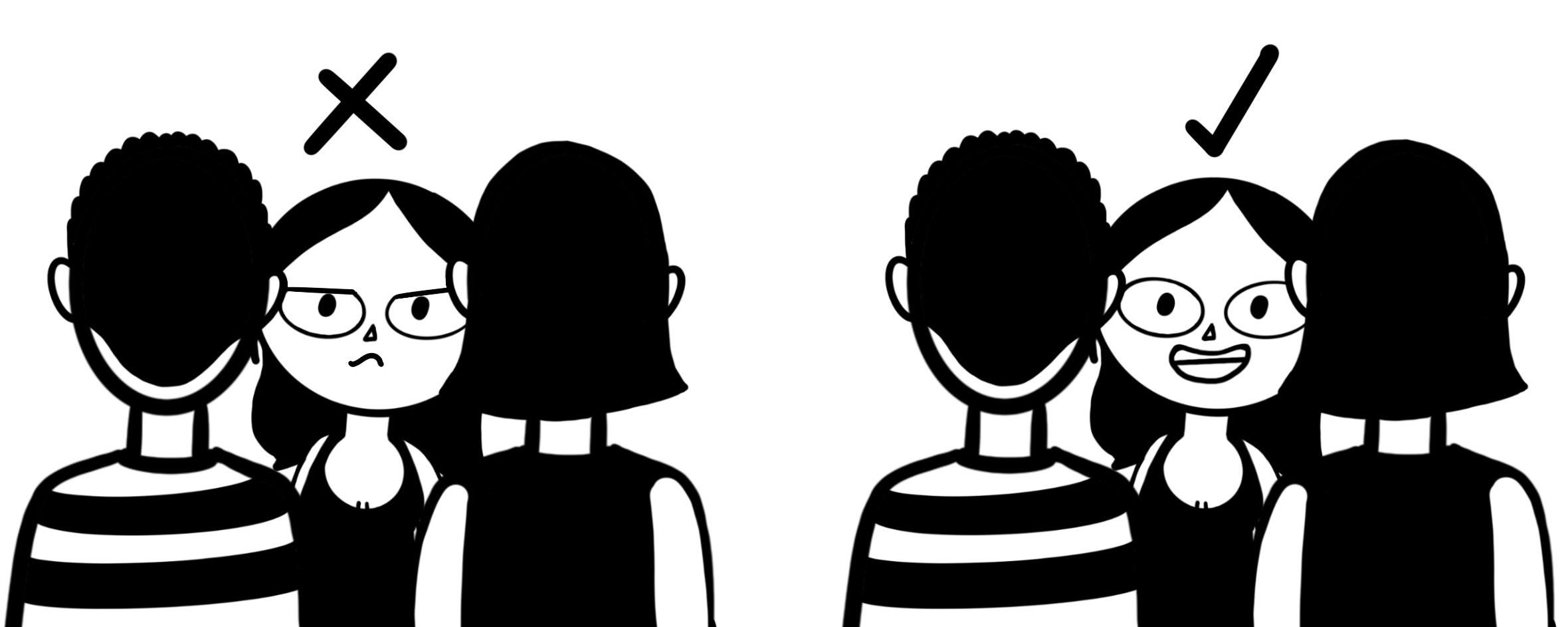
You land on, “I am happy to be twenty-five.” Brilliantly put. If you can contrive some kind of sweet facial expression when you say this, that really helps to sell it. Such an expression won’t appear every time it’s called, your face ever lacking in loyalty to your commands, but do your best not to avoid your typical scowl.
Your email inbox looks just the same as it always does, save for a birthday discount alert from Sephora or some other customer rewards program. You have fifteen or so new, unread text messages wishing you a happy day. You’re happy to have them, but don’t feel too much spite over the texts you expected but didn’t receive. You may not even have the mental organization for a proper accounting of that, and that’s a blessing. You don’t know what, if anything, to post. Maybe you post nothing, and let the day be what it was without the rose-colored rewrite of social media. Ultimately you post a couple of things. I mean, people ought to see that you aren’t some miserable, friendless hermit.
You certainly don’t feel older or wiser than the day before. If anything, the twenty-fifth birthday has put into sharp focus the fragile, hard-fought nature your confidence. God forbid you compare yourself to any other twenty-five year old. There are some that have book deals, for Chrissakes. You struggle to keep your thoughts toward yourself compassionate. It occurs to you to make a true accounting of the things for which you are grateful. Magnanimous parents, safe place to live, friends to complain to— stuff like that. You have the thought to write it down, and maybe you actually do. The list will be lost, if not immediately from memory, then in a few months when you leave your journal on the bus.
Your life is truly upon you now, and there can be no more childish belief in complete helplessness or complete control. That’s a lucky development, even if it pushes you into unknown waters filled with unhappy fish who don’t believe you’ll ever have a book deal.
In the end, you have two options: spin out or humbly congratulate yourself. With any luck, you find yourself beating your oar furiously against the current of natural doubts towards the latter. With nothing guaranteed, as always, simple gratitude and healthy detachment towards the outcomes of proceedings are the best weapons in one’s arsenal against despair and prolonged tantrum. Whether your twenty-fifth birthday is meaningful is not for you decide as it happens. True importance is one of those things that only shakes out in rearview. You can turn your efforts toward making the day important, even making the year important, but such a frame makes one vulnerable to shame and the feeling of being let down. Best practice is to leave such things to be determined by the assuredly wiser and undeniable twenty-six-year-old self.
Have you considered under-thinking? ❤️🤣❤️
“In your early twenties, those senior to you insist that you are in the best years of your life.”
That doesn’t seem right. At least, I’d much more likely find myself consoling someone in their early twenties who was having
a hard time by saying that things improve with age.
And that is continues to be true for a long time. (Until it doesn’t, but why think about that now?)